How Long Does a Nose Job Take to Heal? A Detailed Recovery Timeline
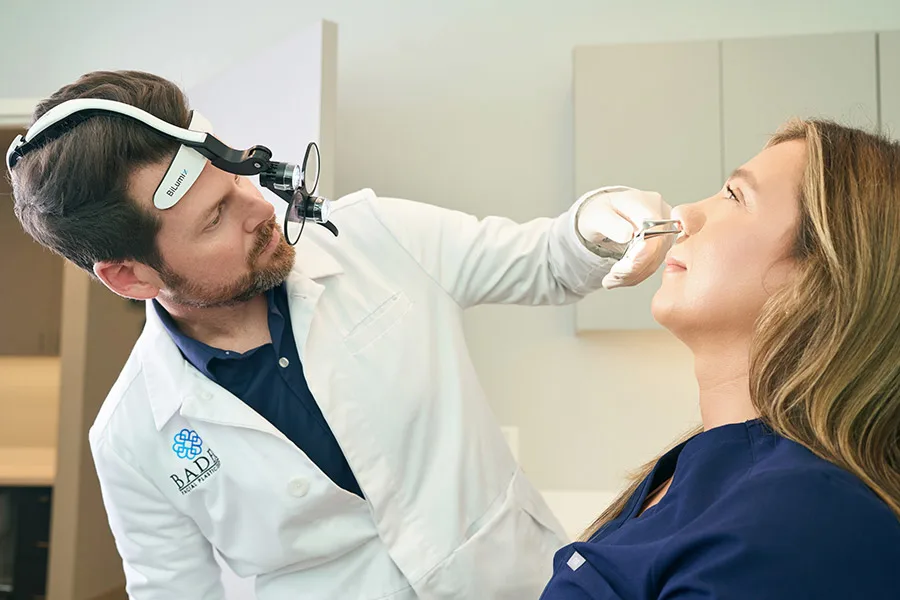
The process of choosing a rhinoplasty surgeon is exciting, but understanding life after surgery matters too. One of the most common questions Plano and Dallas patients ask is “how long does a nose job take to heal?”. Yet, you don’t have to worry about life post-nose job. Dr. Bader will guide you through every stage of healing so you know what to expect, feel prepared, and help your nose recover well every day.
How Long Does a Nose Job Take to Heal? An Overview
Your rhinoplasty recovery unfolds at its own pace, guided by your body as you move through each healing phase. Initially, you will experience edema (swelling), which is a natural response to the surgical manipulation of nasal tissues and structures. Some patient also have some ecchymosis (bruising), but this is rare as Dr. Bader uses advanced instruments like the piezo (ultrasonic). Adherence to the post-operative care instructions is paramount to facilitate optimal healing and minimize complications.
While the initial, more noticeable signs of surgery subside within weeks, the complete rhinoplasty recovery time for the nose to settle into its final, refined contour can extend over 12 - 18 months. Knowing how long it takes to recover from rhinoplasty overall will help you approach this period with informed expectations.
The First Week Post-Nose-Job Surgery
The cast and puffiness you see right after surgery are normal and temporary. There are visible sutures which you will clean and dress with ointment. There are internal splints and drains that may or may not be visible but you don’t need to do anything with them.
Day 1-3:
Expect swelling, a stuffy nose, and low-grade discomfort. Sleep elevated, be sure to adhere to cleaning guidelines and take pain medicine before discomfort builds. These small actions reduce swelling and discomfort after rhinoplasty and keep recovery on schedule. Bleeding for the first 1-2 days is completely normal and should not cause alarm.
Day 4-7
The initial “balloon” feeling eases. At your one week follow-up the external tape and cast will be removed. The internal splints and drains will also be removed and breathing improves immediately. You should feel a progressive improvement in your comfort levels. However, it is vital to avoid any strenuous physical activity, bending, or lifting for four weeks as these can elevate blood pressure and exacerbate swelling or bleeding. Your nose will be dressed again for an additional week with soft tape but no cast.
Weeks 2-4: Early Recovery Phase
This phase marks significant milestones in your healing journey as you begin to see the early changes in your nasal contour.
You'll see a more defined nose, but remember, residual edema is still present. Don't expect the final result yet; this is just part of your recovery journey.
As the swelling continues to decrease, the underlying refined nasal structure becomes more evident. Some activity restrictions, like avoiding strenuous exercise and direct pressure from eyeglasses on the nasal bridge, will continue until I advise otherwise.
Months 1-3: Continued Healing and Final Shape
Daily life feels normal again. Most of the swelling now hides at the tip and sidewalls and shifts throughout the day. Slight numbness or asymmetry is common and temporary. Most patients see a nice side profile within the first 2 months but the front view might still look wide and asymmetric.
Many patients schedule important events like weddings, reunions, and headshots after the two-month mark because the nose photographs well by then. Gentle cardio and weights return at four weeks but any contact activity is not permitted until the three-month mark. If a workout makes the tip puffy, simply scale back for a day.
You can restart non-contact exercise after week four, gradually returning to full intensity. Guard the nose from any sun exposure with SPF 30 + and a hat, as the ultraviolet light can permanently darken healing skin.
Months 6-12: Full Recovery
The soft tissue swelling continues to improve and a more defined contour is revealed month by month. The process is not always a straight line. There can be “bad nose days” that interrupt your progression but understand that this is part of the process and temporary. Around month twelve, most patients see their final shape. Remember, patience is part of the prescription.
Morning puffiness that vanishes by noon, or a firm tip, is normal and improves with time. Sometimes injections are recommended to modulate the swelling and scar tissue. Rarely, a small imperfection may need a touch-up once healing is complete at the one-year mark.
Factors Influencing Rhinoplasty Recovery Time
- Skin Thickness: The thickness of the skin plays a huge role in the healing timeline. Thicker skin might retain edema longer, especially if the patient’s nose was made smaller. Thin skin patients typically see resolution of their edema sooner.
- General Health: Non-smokers and people with balanced diets typically heal faster.
- Technique & Aftercare: Gentle surgical handling plus diligent home care equals the shortest rhinoplasty recovery time. Genes, previous surgery, allergies, and even seasonal humidity can nudge recovery, but nutrition, sleep, and regular check-ups stay within your control.
Tips for a Smooth Recovery and How To Reduce Swelling After Rhinoplasty
- Ice & Elevation: Cold compresses and a 30-degree sleeping angle tame swelling, especially for the first few weeks, to aid drainage.
- Hydrate & Nourish: Water, lean protein, and vitamin-rich produce fuel tissue repair.
- Move Smart: Short indoor walks improve circulation without risking bumps.
- Skip Smoke & Alcohol: Both constrict vessels and delay healing.
- Stay Positive: Celebrate each milestone, as stress hormones can slow recovery.
- Bonus: Keep a brief recovery journal, seeing daily progress lifts spirits.
Common Concerns and When to Contact Your Rhinoplasty Surgeon
Call Dr. Bader if you notice heavy bleeding, fever above 101ºF (38 °C), foul drainage, or sudden painful swelling on one side. For anything else, big or small, reach us immediately. Remember, it’s normal to feel emotional around week two; looking at progress photos helps you see your improvement. If anxiety builds, email early, and reassurance is part of our care.
Want to Discuss Rhinoplasty Recovery With An Expert?
So, how long does a nose job take to heal? Expect noticeable improvement in weeks, but the final, refined result often takes up to a year. Patience and meticulous adherence to post-operative care are your best allies for a successful outcome. Your recovery from rhinoplasty moves step by step toward a much-anticipated transformation.
If you’ve already experienced rhinoplasty, share your story below. If you’re considering surgery, please ask your questions, and Dr. Bader will guide you on your rhinoplasty.